“All I want for CISA, is you….”
Happy Critical Infrastructure Security and Resilience Month for all those who celebrate! This year I wished for an “acting executive assistant director for infrastructure security.” And look at that!
(ed. I mean, a confirmed head of the CYBERSECURITY AND INFRASTRUCTURE SECURITY AGENCY would be nice…but I don’t want to appear ungrateful)
Send in the Takes
I don’t know from political trends and “national mood” and all that. Per GR’s First Maxim:
The smartest prior is epistemic humility
Meaning anyone drawing high-confidence, low-nuance conclusions from a major national election is giving you a strong signal to discount their claims. But by all means, try to force the results of 470 federal offices, almost 300 statewide offices, and some 45,000 “elections across 55 states and territories” into a take on what the election means.
Unrelated: I’ll be on NewsNation tmrw morning to give a take on what the election means.
AI @ Work
Specialist occupations wrestling with the implications of changing technology is a fascinating sub-genre of Substack essays. The best ones are instructive, even if its got nothing to do with what you do.
Unfortunately so much content, especially on AI, focuses on sweeping, unfalsifiable claims about how “businesses” need to adapt to a “changing landscape” and “reimagine” the way they do things (see, e.g., LinkedIn). Consultant-speak dressed up as insight.
The always great Ground Level AI saw it first hand last decade:
I spent most of the 2010s writing about enterprise technology and something called “future-proofing your business.” It was one of those ubiquitous, jargon-y phrases, usually accompanied by advice about moving to the cloud, modernizing infrastructure, going through “digital transformation” and becoming more “data-driven.”
An essay this week is the opposite. Stephen Gallagher is a working architect and in an absolute gem of an essay, he systematically subjects multiple AI models to specific job tasks and reports on the results:
Architects and related professionals are poised to experience the shift that software engineers experienced during the past year, in which direct, manual production of technical drawings is replaced by supervision of AI models that grow increasingly capable of complex technical drawing tasks.
…Given their rate of improvement and given what we know about how they work, we should assume that they will get much better at drafting in the relatively near future.
But his actual conclusions aren’t what make it so great. In a few thousand words and handful of illustrations he manages to:
explain in plain language the specific tasks making up the job and give background
not betray any obvious preconceived notion about AI (good or bad)
lay out the methodology and data
draw takeaways that follow from the results, without dramatic overstatement
But what absolutely tickled me was at the end he manages to essentially work out a partial equilibrium analysis for the building industry (both goods and labor markets) and nod to implications “not limited to the architectural profession.”
I’d honestly pay good money for a series of these across occupations and would bet they’d provide more value than a 12-month consulting contract.
FWIW, he also manages to validate a couple of GR’s own models:
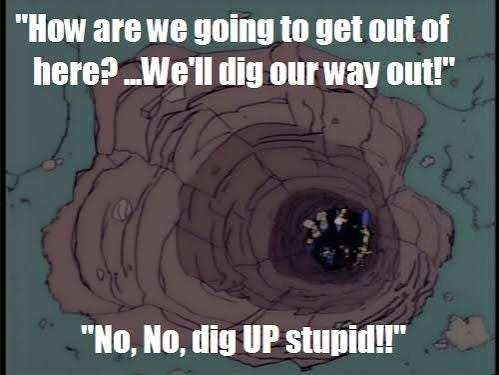
Dig UP!
I continue to believe tech’s pariah place in populist politics was avoidable. For instance data center buildout could’ve emphasized the possibility for a win-win like in Loudoun County, VA: higher tax revenues + lower tax rates → increased spending on schools and public safety.
My best guess is decades of benign neglect for all those NPCs (read: voters) atrophied any political muscles.
OpenAI may be the most adorable of the newest generation of tech political players. The same company that:
after pivoting to a state-by-state policy strategy, proudly coined this process “reverse federalism”….or what the rest of us call “federalism,” and
had to conspicuously disown the biggest midterm election PAC spender (pre-Musk)…
is now, anticipating a shift in Washington, trying not to “chase the moment”…by spending big to get “in sync with the new Washington.” Guys, announcing a splashy new strategy the week before a major change is exactly what chasing looks like.
Maybe AI execs are just bad at selling their product.1
Etc.
“…the risks to U.S. national security of moving too slowly outweigh the impacts of imperfect alignment." That’s one view.
Captain Obvious sighting: “Americans are increasingly against building data centers near their homes and favor candidates who oppose them.”2
Speaking of which (icymi): my brief writeup of the issue at Reason.
Any readers in East London? I’ll be working from Shoreditch next week. Where do locals hang?
Certainly between Leading the Future and Musk’s America PAC, ROI of the political product sales division is disappointing. For the contrarian view though, from a VC mindset this reflected a Power Law strategy. IOW, you only need to hit big once.
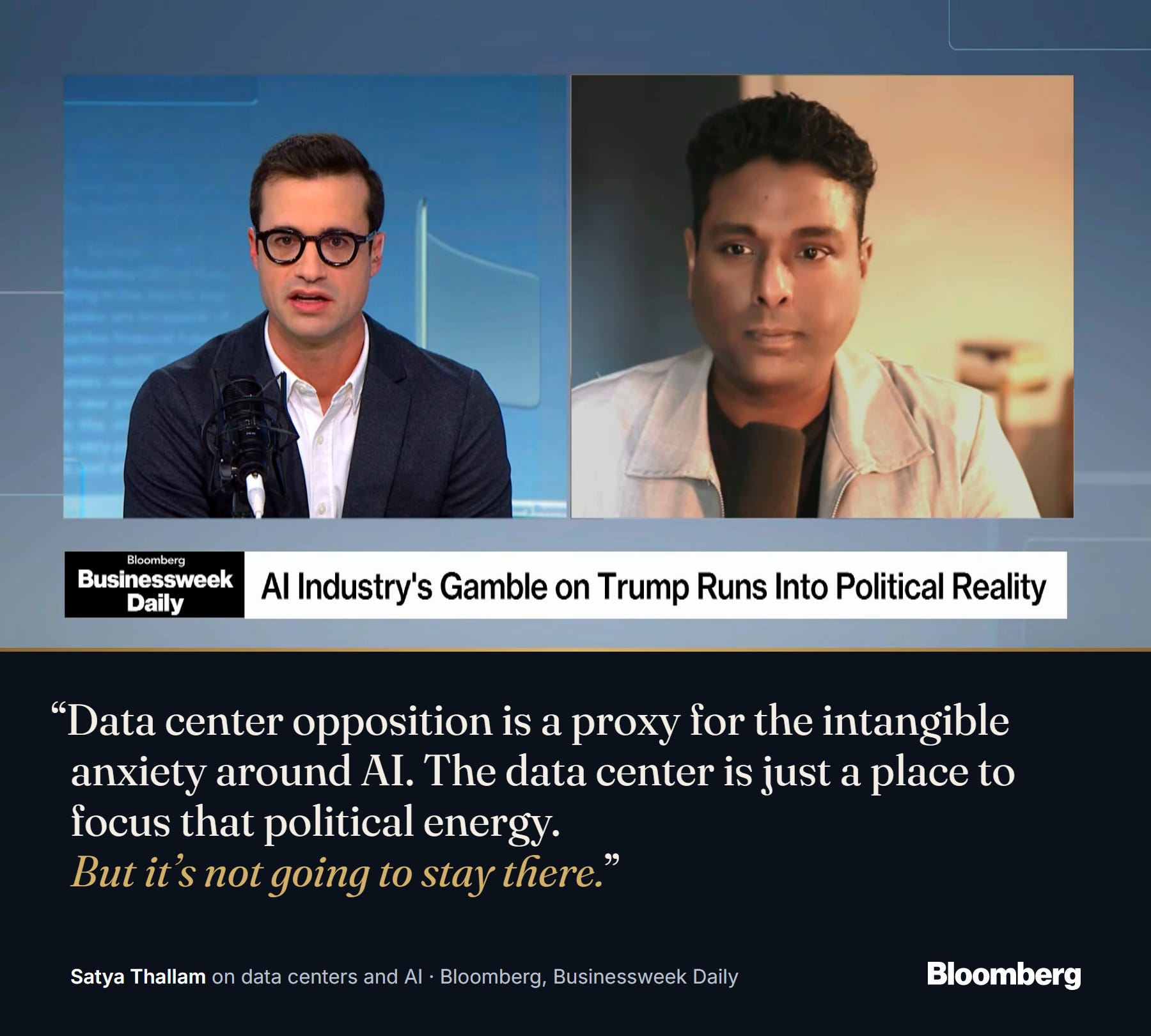
On Bloomberg Monday I hoped to dig into the nuances of this issue, but kept getting sidelined by election eve horse race stuff.