Curios et Ceteris: Long Live Tape, Essay Tests, & Zero-Days
Under 5 Mins - Analog storage is back, a pedagogy for the chatbot era, and bugs for the many

Long Live Tape
A hard return to analog music recording has been underway for over a decade, but now a byproduct of our data heavy world is increased demand for analog data storage.
Fujifilm’s Linear Tape-Open format, which looks and operates basically as tape has since the 1950s, will see a 5x increase in production in the next couple years due to AI-generated demand for storing data records.
Which seems fitting, given that arguably the world’s most powerful CEO-founder was just brought down in such a tediously old-fashioned, analog way. Spycraft so cliche that it would have John Le Carré throwing his tea in a fit.
Testing the Right Technology
Anecdotal Value issued a cri de coeur for the academic class, to focus their energy on the real threat: Canvas! Which is a course management system used by most U.S. colleges. Amidst all the pearl-clutching about cognitive offloading, cheating, recursive self-disinterestedness, she argues the slow dissipation of learning owes more to this administrative software than the usual “AI is making students dumber” takes.
Putting Edtech aside, here’s a modest pedagogical proposal to force students (and teachers) into synthesizing and demonstrating knowledge.
Assumptions:
use of the internet and AI is irrepressible, and at-home proctoring software for watching students work is just gross. (Plus I’m guessing there’s a Heisenberg effect where knowing they’re being observed changes the output).
and that a typical class session is not enough time to write a high-quality multi-page paper.
So for a given topic, after it’s been covered through the normal combination of lectures, readings, and discussion:
At home. Write a 750-1200 word essay on the topic using whatever tools you want. You can straight up prompt GPT5 to write a “750-1200 word essay on the topic.” You’re basically self-producing a study guide, with tech aids, in the form of an op-ed. Anyone can instinctively root out a poorly argued or irrelevant argument in an op-ed, that’s why they publish them in The New York Times!
The quality of prose is irrelevant because a high-quality output depends on knowing what to prompt: what discussion in class was the most heated? what passage in the reading was the most curious? What's so obvious, as to betray unfamiliarity with the material?
Even if the full syllabus and readings are uploadable, the student will need to have some idea where to point to, and draw out a succinct conclusion that isn't ridiculous.1
In class. Write a 300 word essay on the same or follow-on topic. Short enough to complete in time, easy enough to read through. Even if a student manages to surreptitiously tab over to the chatbot on their laptop, it won’t help that much. Limit it to 10 mins if you must. Making an argument that quickly, in that space, requires real-time cognition and judgment. Possibly make them read it aloud, where any AI slop will be immediately revealed to their classmates.
You can even do this at the start of every class, 150 words if necessary. It’ll demonstrate actual familiarity with the argument, whether you relied on AI in Step 1 or not.
Final. Write <1000 words (as short as you want) on what you think is the most important topic from the class, building on your earlier work. By keeping it short, you don’t get to overwhelm the output with superfluous content. In my own extensive use of AI I find paring down — focusing on what’s important and compelling, eliminating distracting argumentation — is what’s most required.
None of my writing would fail an AI detector in the end, but I DO often start with a “discussion” with Claude to quickly get all the relevant (and irrelevant) elements out on the “page.” Again, it’s akin to a study guide or talking to a TA before I go off and write on my own. Ultimately I don’t believe anyone would argue I don’t know the material.
And that’s the only test that matters.
AnthropoloGSA
Your roughly bi-weekly reminder that the company that is designated a “supply chain risk” by the U.S. Department of Defense (which is still technically upheld by the DC Circuit), is also a preferred vendor for every other department in the government.
In fact the partnership is expanding
through a new agreement that gives government partners a 40% discount on Claude Enterprise, Claude for Government, and the Claude API.

Zero-day Scarcity to Zero-day Abundance

Bugs that Washington, Moscow, and Beijing used to hoard like nuclear fission material are now becoming available to an educated AI user. An era of zero-day abundance will force cybersecurity to shift to an industry built around fixing flaws as fast as humanly, or superhumanly, possible. This is a challenge for the many, not the few—it demands something from your average IT person at a school, the contractor running a local water plant, a security team at a tech firm whose warnings may have previously been ignored. It’s almost a test of the metabolism of a society: how well bottom-up incentives are working.
“Feelings are facts too”
Ctrl-Alt-Speech just interviewed Dex Hunter-Torricke, an incredibly compelling advocate who knows of what he speaks. He made a point I’ve been nibbling at for years, managing to do so more concisely than I could. It applies to both the tech industry itself and the tech containment advocates.
Feelings are facts too. They're actually the most powerful facts of all. They shape human decisions and choices far more than any numbers you can assemble in your spreadsheet.
Shouts to co-host Ben Whitelaw who I happened to meet this week in London—quite a charming fellow, as they say across the pond.
Etc.
Lawfare ran a long-gestating piece of mine: “With Mythos, a Fable as Old as Time.”
After a week hanging out at and around LISA, one is reminded of the overwhelming density of both tech labor and quality food/drink establishments in East London. Is it possibly top three in the world on both counts?
At my first stop, they instantly clocked me as industry and gave me a weeklong to-do list: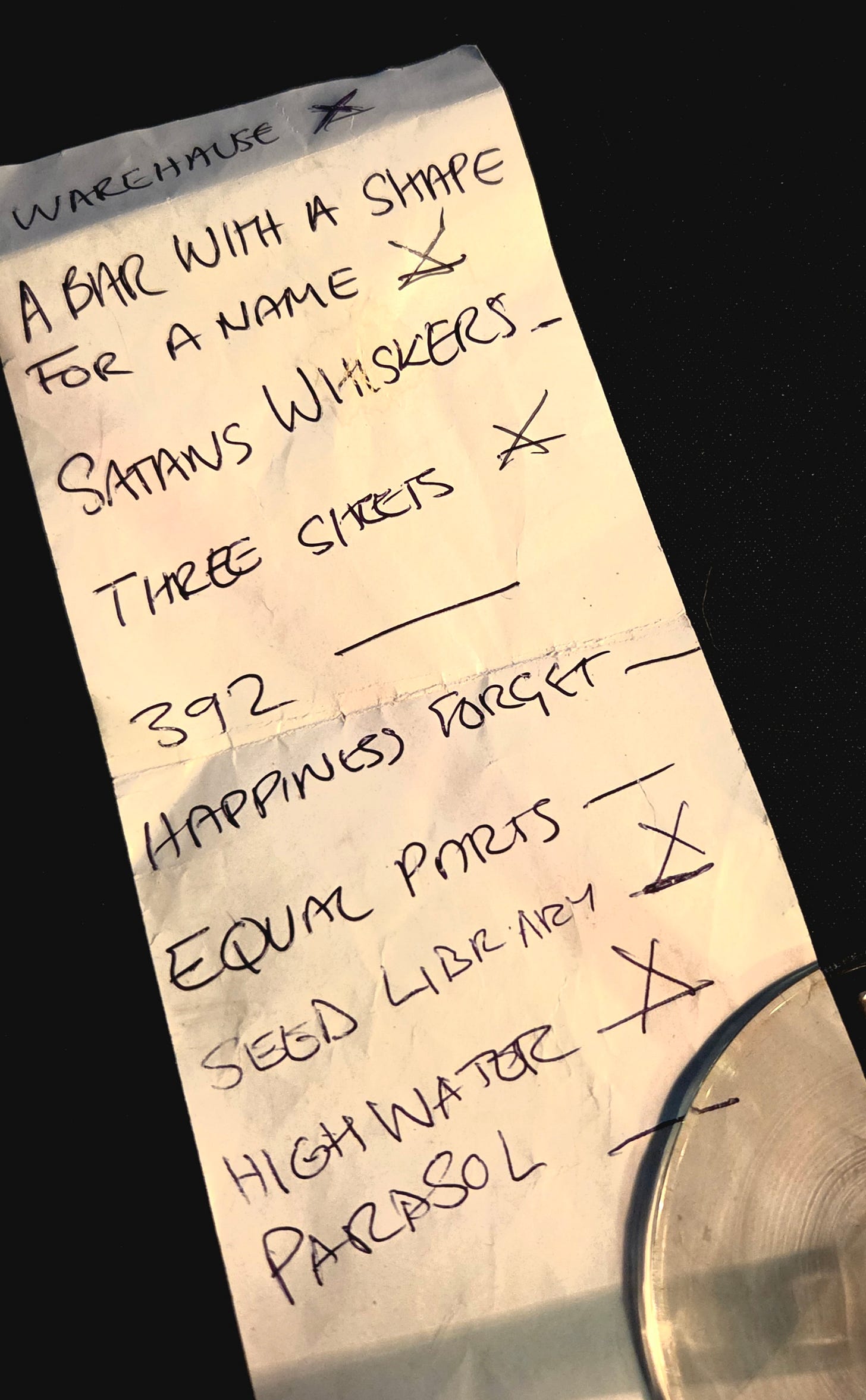
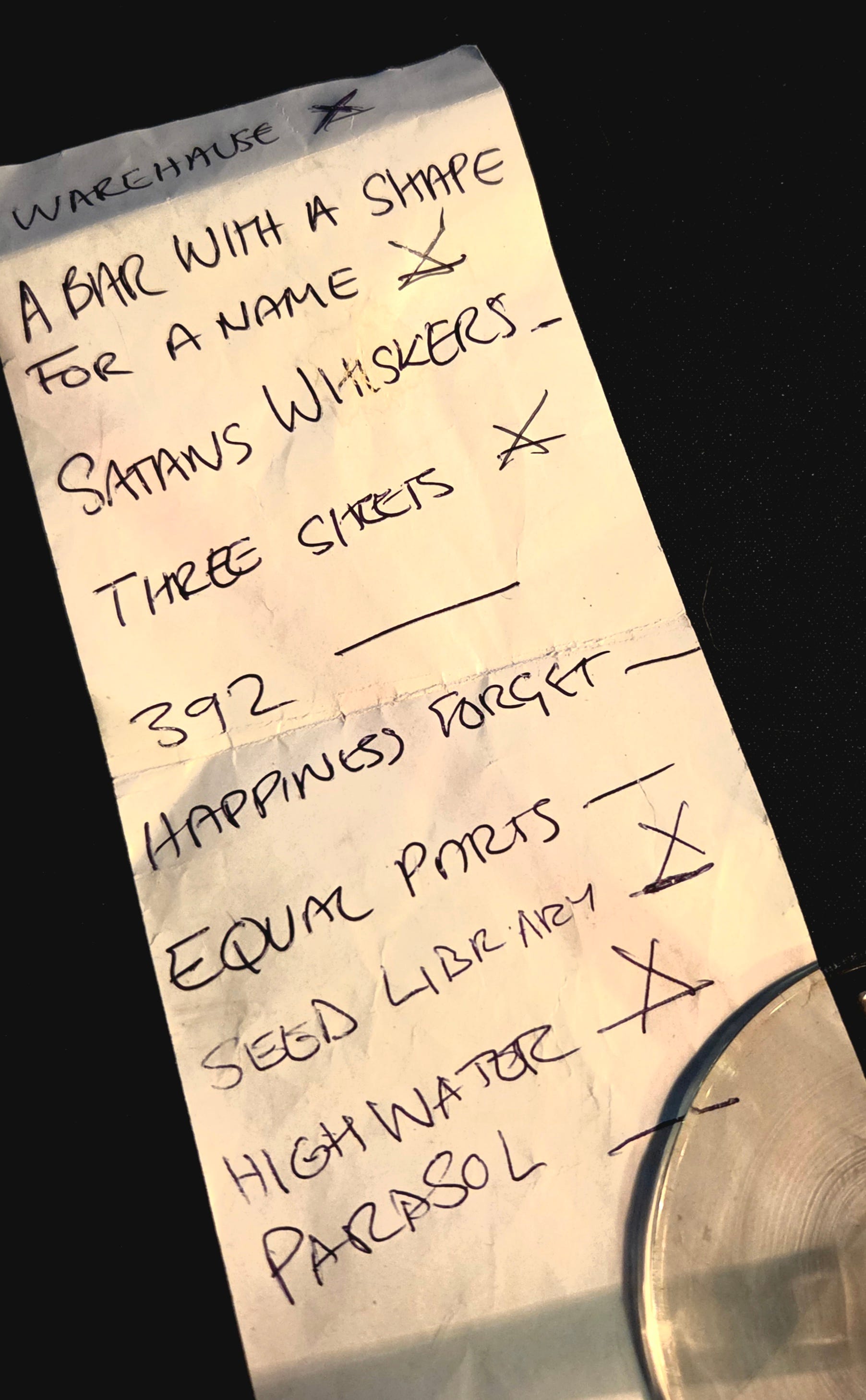
Mike at High Water London immediately decided I needed a cocktail scavenger hunt while in town. Which was iteratively amended at later stops. Made it 50% through. Offered without comment:
I believe that Democrats want to create a surveillance and censorship state that's turbocharged by superintelligence. I mean, that's ultimately the end state.
—David Sacks, All-In podcast, Nov. 9, 2026
[OK, one comment. This is the guy who dunked on Anthropic for raising “mass domestic surveillance” as a concern in their dispute with the Department of Defense]


Publication editors who use AI detector programs on submissions are, yes, enforcing their editorial rules they hope reward human-generated thought etc. But in an op-ed form, what they’re really doing is offloading their judgment in what they hope is a more efficient form. I think if an AI can produce a high-quality, pertinent essay you should be fine running it (with disclaimer). But what they’re really saying is I don’t want to waste the time to read this to come to the same conclusion which is that it’s not great on purely substantive grounds.
Comments