


The Reasonable Burning Man Standard
First, some context:
On Sept. 5, Mary Herre was on her way to a math-themed camp at Burning Man for a slice of pie when she noticed two skydivers landing in an area with lots of foot and bike traffic.
…Within moments, [she] was suddenly struck by a third skydiver on the left side of her back — the same side as her sole kidney.
“I was just screaming, ‘That’s my only kidney, that’s my only kidney,’” Herre said. “I was terrified, and then I was in excruciating pain.”
Notwithstanding the story’s Mad Libs oddness, this is a fairly classic tort situation. As the article asks: “A skydiver landed on her at Burning Man. Who will pay the medical bills?” Who indeed?
Parties involved include the skydiver, the event’s host (Burning Man Project, a 501(c)(3) non-profit), and the woman herself in case attendance involves some waiver and/or due care.
I haven’t reviewed it, but a relatively more complicated scenario than the above is why Rep. Trahan’s (D-MA) bill on AI liability is welcome. Because that stuff is way more complicated, and it’s not limited to once a year in the Nevada desert.
The World’s Smallest AI Quiz
Back in the pre-The Social Network days when we still enthusiastically posted pictures on Facebook we would almost certainly come to regret, “The World’s Smallest Political Quiz” became one of those informative and ridiculous illusions that were nonetheless irresistible.1
I was reminded of that after coming across Kate Gage’s digestible taxonomy of The Six Factions Shaping AI. Myself, I’m still sorting out the various camps and secret handshakes of Bay Area tech cliques—I’m pretty good at code-switching though it does require some language immersion. But the six categories roughly track my own internal mapping.
Imagine my relief when the description most closely matching my own disposition is #6, “Pragmatists.” (ed. I feel so seen)2
The point is all six categories read as reasonable on their own terms, and good faith engagement shouldn’t dismiss any of them out of hand. In fact the group I find the most frustrating (#1, “Accelerationists / Tech Right”) is the one with which I have a great deal of agreement. I just wish they were better at [*gestures wildly*] their whole deal.
Speaking of the Patagonia Patrol…
Look, the internet is not real life so put this all in proportion: the war among the various AI camps is a sophisticated influence campaign.
In “Who is behind the AI Safety Backlash?” (Model Republic) Tyler Johnston does an influence/social network analysis of the full court press in response to the frontier lab loud quitting trend.
No surprise, it’s essentially a 1-4 ISO ball kinda thing.
No hate. You use the tools you got, and there’s no rules in this game. I’m sure some of the LessWrong folks would ring the same bell. Not being on TwiXter, I don’t know how it works.
But see above, it’s why I wish the folks I ultimately agree with were just less off-putting. Great parties tho!
Hand Covers Bruise
Gregory C. Allen did the hard work and lays it all out. In what I assume is his last paper since leaving CSIS he establishes the groundwork for why a working insurance market is necessary for AI adoption (“The Insurance Industry’s Retreat from AI Threatens to Slow Innovation and Adoption”).
He overlaps much of what I was considering for a longer essay of my own. The short version is among other things, if we don’t have a credible database of AI incidents, no one can underwrite the risk, and eventually that’ll constrain adoption/deployment of AI, especially agentic AI systems.
Knowledge of the risks will get out there, and stock prices will reflect that in a noisy, imprecise way. But without some systematic reporting system of incidents — like in cybersecurity proper — companies won’t be able to mitigate risks through underwriting and insurance. Because who’ll price a risk they can’t measure?
Lots more to say, including dunking on industry opposition to even a voluntary reporting system, and the bizarre phenomenon of cybersecurity insurance premiums declining despite acknowledged increases in risks.
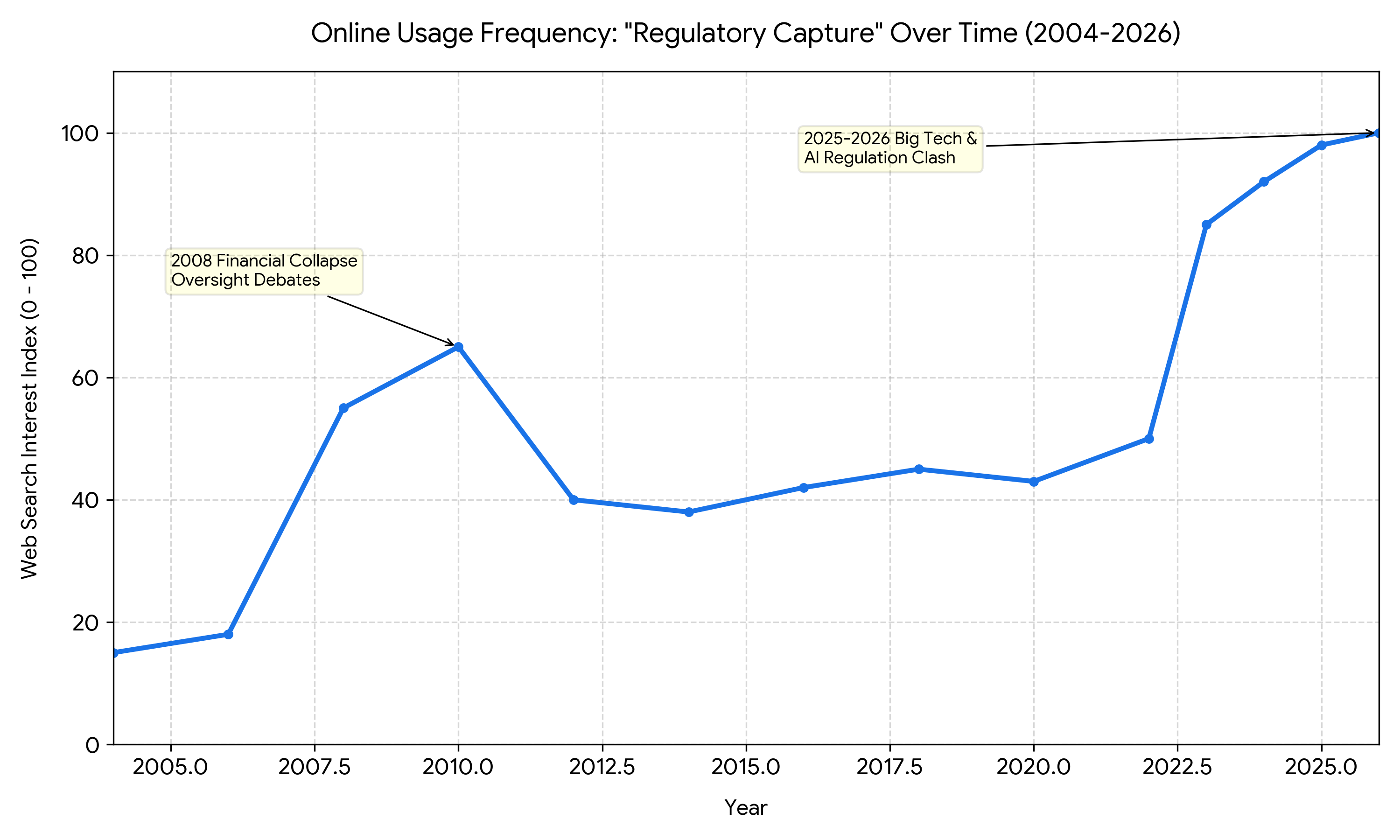
For now I’m just hopeful the willful misuse of “regulatory capture” has peaked and we can get back to talking like adults.
What, Me Worry?
Jasmine Sun did the country a service by actually talking to people about their AI anxieties vis-a-vis the data center backlash. From her now high-profile reporting:
…what made data center activism such a nationwide phenom?
The only solution seemed to be hitting the road, going to the towns where data center fights were happening, and talking to as many people as I could: activists, yes, but also workers, planners, politicians, and residents. I wanted to learn: Do most people actually care about data centers, or just a passionate few?…How did local opposition become a national issue?
Beyond that piece, a stray remark on the The AI Policy Podcast gave me pause. She noted, in so many words: in SF everyone is running armies of AI sub-agents, and in DC everyone retreats to But China’s open-weights! Yet most people in America only know AI through free services.
That’s not a small thing.
Consider PNC Bank reported as of May (among their customers) “households paying for a Gen AI subscription reached [*drumroll*] 2.2%.” Meaning most people’s assessment of AI’s capabilities or threats is extrapolated from some weak sauce—the free services are frankly pretty crappy. Of course a greater number have access to more advanced models and applications through school or work. However beyond being hit over the head by the enshittification of Google search through “AI Overview,” limited context windows, lack of multi-step workflows, rampant hallucinating, and bounded automation means the “public” impression of AI is not the same as the rest of us.
The failure to recognize that disconnect is Exhibit #143 of why tech is having a conversation no one else is really interested in.
Which is not to say the Golden State Worriers are any better, what with their p(doom) and backchaining and all.
Etc.
Lawfare: The Many Open Questions About the Trump Administration’s New De Facto AI Model Licensing System
I’m scheduled for LiveNOW from FOX tonight to discuss, what else, cruelty to Anthropic models!
The author is Non-Resident Senior Fellow at FAI
A convenient result (for some of us) that the quiz’s wording intentionally led to overrepresentation of “libertarian” results.
I’m going to replace the chyron on TV hits with “Nonresident Senior Pragmatist”