


Now AI’s coming for your ice cream…
The latest Hard Fork episode opened with a puzzling product feature. A new ice cream scoop sporting a “This product contains Al” label. Inscrutable, and yet irritatingly unsurprising. We habituate freakishly quick to asking “Should This Thing Be Smart?” about an onslaught of superfluous upgrades. It’s just now pivoted to AI toothbrushes, toasters, and that godforsaken water bottle.
The ice cream scoop, however, is a reasonable use case. Did you catch it?
It wasn’t “AI,” it was “Al”…as in aluminum. Such is our conditioning.
A reading from the Book of Moratorium
Blessed are the policymakers, for they will be called to do something.
Blessed are those who hunger and thirst for a policy vacuum, for it will be filled.
I don’t know if the current AI state of affairs qualifies as a “policy.” Or if it’s what anyone hoped for. I do know lots of people who, uh, think it’s not what you want:
“…horrible for the broader AI system.” —Adam Thierer and Neil Chilson (June 16, 2026)
“…the message DoW is sending[:] there is no such thing as private property….if we are really living through a rapid ‘takeoff’ to transformative AI…the Trump Administration just cast itself as the enemy of the industry.”—Dean W. Ball (March 12, 2026)
(Not everyone though. There’s nothing the Admin could do that David Sacks can’t post hoc rationalize)
Stipulated: any one of the Administration’s actions are arguable on their own. National security concerns, military uses, cataclysmic cyber vulnerabilities…none of these run off the court at tip-off.1 Taken together though without any knowable criteria, procedure, even any legible policy aim (beyond “win in AI”), does not an innovation-friendly environment make.
Worried about the cost of regulation? For all this breathless “AI is far too important to smother in bureaucracy” and “with unnecessary regulation…they're going to win,”2 what we’ve got instead is some pretty overbearing, binding, non-incremental government intervention—one might just call it regulation in other form. Without the benefit of predictability. It sure as hell ain’t law. As they say: “Live by the Executive Order, die by the Executive Order.”3
Worried about regulatory capture? Look I have no idea whether it was in fact a credible jailbreak, brittle cyber safety classifier, or what.4 But if a single call from a tech exec is enough to set off a frantic global model takedown, how is that better? (Say what you will about the tenets of regulatory capture; at least it’s an ethos)5
You hate to see it…and predictable two years ago, after a fashion. Following the Supreme Court Chevron/Loper Bright decision, I tried to hammer home at a Congressional hearing that the supply of decision-making we call public policy behaves kinda like the First Law of Thermodynamics.
“[Inaction] by one branch…dynamically increases the opportunity for the others to displace that disengagement.
…[E]nergy in the system is never destroyed but only modified or transferred.”
You can argue the ideal atmosphere for healthy innovation is a hothouse concentration of high oxygen and low Federal Register pages. But mind The Grand Resign’s 3rd Maxim: ideal ≠ optimal. The Nash equilibrium never included status quo ante/full policy vacuum. Eventually some exogenous factor or public sentiment forces the issue, and I had bet all along these people wouldn’t love the result.
Because whatever the cause, it’s either overheated public reaction or overreactive political body. And if it’s not in Congress than it’ll be somewhere else. Because nature abhors a vacuum and politicians love repressurization.6 (ed. the physics metaphors are a bit much)
My rap to Hill staffers is it’ll be something like a front-page scale AI-executed cyberhack, big enough that everyone takes notice, but not catastrophic. A hypothetical “cyber cataclysm” model release wasn’t exactly that but I’ll take half credit.
Some meaningful federal statutory framework doesn’t solve unpredictable machinations, but it does: significantly reduce the variance, establish a vector for legal remedy, provide direction for late-adopter downstream users and contributory industries, and hopefully addresses the demonstrable externality risks.
It’s a tradeoff:
suboptimal + stable
vs.
more optimal + super unpredictable
At least that’s how I see it. Everyone’s been tediously repeating that saying, y’know, “even in war, the enemy gets a vote.” Applies to policy fights too.
I am not throwing away my shot (at a data center)
Kevin Frazier argues the New York state data center moratorium beyond bad policy is counter to founding principles.7 And at least one late politician would be offended:
The interfering and unneighborly regulations of some States, …if not restrained would be multiplied and extended till they became not less serious sources of animosity and discord.
—A. Hamilton (Federalist-NY)
ed. Kevin’s very smart, and super nice to boot. So my riposte is in good humor.
DISCLOSURE: I used to work on AI policy at the White House and yes, I've been a registered lobbyist on this stuff, so discount accordingly
No Harm, No Foul
Arguing the individual policymaking prerogatives of states is conditional on a shared national interest - “the several states must sink or swim together” (quoting Cardozo) - he concludes NY’s beggar-thy-neighbor law therefore violates this fundamental premise (conceptually if not legally).8
I don’t see the violation however.
Theoretically in all domains, welfare increases under uniform policy relative to differential policy ceteris paribus, at least in terms of economic efficiency. But the founders left a distributed federalism in place anyhow. So it can’t be the case states are structurally expected never to impose welfare losses elsewhere (though I take issue with this claim).9 I assume they acknowledged some tradeoffs, like (a) localized non-economic impacts can justify the otherwise suboptimal outcome, or (b) even the optimal uniform policy is a priori unknowable, and sometimes a messy discovery process is necessary.
It’s unclear what “infrastructural burden” NY is imposing. NY currently has no hyperscale data centers. So any burden off-loading is a range of 0 to NPV of future potential burden. It’s at best a burden in terms of reducing potential future unrealized benefits, no? It may be bad policy, and I’d agree, for any of several reasons but bad policies aren’t categorically precluded by the Constitution.
To the degree this implies per se violation of the Commerce Clause:
No specific cognizable harm ≠ standing.
It’s not discriminatory. Not in the way the courts understand it. He acknowledges NY “will not bear the costs nor reap the benefits" (emphasis added) making it unclear who’s discriminating against whom.
Again, I don’t know a basis by which the Constitution prevents states from making themselves worse off vis-a-vis other states. It’s not a quality heuristic (see, National Pork Producers Council v. Ross, 2023) and there's no law against bad ideas.
Locally Made, Locally Paid?
“[N]ot only bad politics and bad economics, it's also bad constitutional behavior.” (1 for 3) Not so sure on the politics,10 fully agree with the economics. But then…
“New York is 3rd among states in Claude usage.” If this is evidence of unfairness in burden-sharing, it’s immaterial. Even wildly disproportionate imbalances between production and use doesn’t tell us anything about what to do. Ex:
NY: 4th in gas consumption → tied for last in refinement / 4th in population. Gas production FULLY creates both benefits and negative externalities.
CA: 1st in food consumption → 1st in food production / 1st in population.
One has infrastructural aspects, the other is part of an essential supply. So...are these violations of our constitutional norm?
Data center moratorium—
bad on prudential terms, sure. But is it “bad constitutional behavior?”
What’s the big emergency?
Remember all the smug responses to the “all lawful purposes” language in the Anthropic-Pentagon dispute?
There's a statutory authority allowing the Secretary of Defense to test chemical/bioweapons on humans. I don’t mean the ability to. Like legal permission.
Well, that’s overstating it. Just sometimes. Like when the President declares an emergency. Or during war. It’s right there in federal code.
50 USC § 1515. Suspension; Presidential authorization
After November 19, 1969, the operation of this [chapter] [50 U.S.C. 1512, 1513–1515, 1517], or any portion thereof, may be suspended by the President during the period of any war declared by Congress and during the period of any national emergency declared by Congress or by the President.
(Pub. L. 91–121, title IV, §409(e), Nov. 19, 1969, 83 Stat. 210)
You see it right? Ah, forgot about this part.
§1520a. Restrictions on use of human subjects for testing of chemical or biological agents
(a) Prohibited activities
The Secretary of Defense may not conduct (directly or by contract)-(1) any test or experiment involving the use of a chemical agent or biological agent on a civilian population; or (2) any other testing of a chemical agent or biological agent on human subjects.
Have her back in one piece
Let’s back up. While ago a few of us pushed to address the Executive Branch’s confounding scope of emergency powers. (Really Elizabeth Goitein is the OG, I merely tagged along. Any time you see credible data on this it’s from her work at the Brennan Center)
For decades Congress would regularly drop “in case of emergency” clauses into legislation delegating extraordinary Presidentmaxxing powers. And there wasn’t much limit beyond declaring an emergency and some reports to Congress (they rarely did).
For example the 1969 NDAA appropriates funds, assigns some responsibilities, and grants or rescinds authorities for the DoD. But Congress acknowledges, especially in the case of national defense, sometimes you gotta loosen the leash. Repeat that over hundreds of bills, over many possible exigent circumstances,11 across dozens of policy domains.
And because we don’t have an available heuristic to fully define “emergency,” the second best solution is overlaying a catch-all emergencies law setting some universal time limits and handing the keys back to Congress. We even got damn close.12
Anyway, Trump I’s border wall funding and COVID immigration restrictions, Biden’s student loan forgiveness, and Trump II’s recent tariffs, née “duties” and “import surcharges,” are all recent vintages of actions enabled under this emergency authority scheme—all time-limited and yoked by Congress under our bill had it passed.
What about human testing for chemical weapons…?
So in trying to navigate DoD’s mix of authorities and conditions of use in 1969, Congress wanted to straight up eliminate this human testing under any circumstances.
CUT TO: various changes to these laws over time, something something cross-referencing something…Where it says “chapter” should be “section.” A drafting error means this authority unintentionally remained extant by law.

Oh almost forgot!!! Thankfully it was fixed exactly two years ago by a diligent Congressional Research Service attorney. (I take back everything I said about CRS)
The author is nonresident senior fellow at the Foundation for American Innovation
On the contrary, I’m emphatic that AI cybersecurity risk is structurally a problem fully addressable only with some regulatory considerations.
You can tell when someone’s hit their limit of understanding this line of thinking because of the load-bearing modifiers. “Smother[ing]” and “unnecessary” regulation is by definition unproductive. It’s what we in the industry call “an unhelpful tautology.” Like, for example:
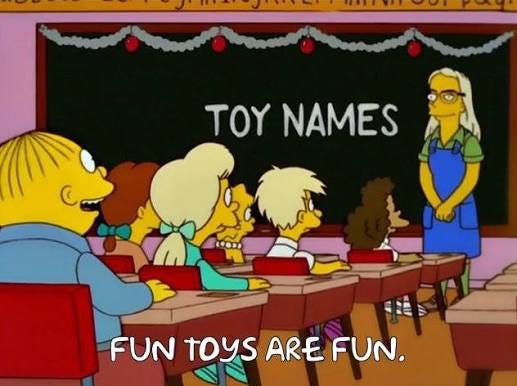
No one says this.
How could I, there’s been no substantive disclosure of relevant information?

Which reminds me. When Marc Andreessen compares any regulation of AI (again never defined) as equivalent to our lost 40 year nuclear hiatus, he’s missing the point. The effective nuclear power hiatus in the late 70s was largely the result of public unease.
Summer 1978 (Hatch Unit 2, GA): the last nuclear commercial “critical operation” (the word for when the generation is self-sustaining) before rules change.
Spring 1979 (Three Mile Island Reactor 2, PA): incident leads to public support for nuclear immediately dropping by one-third.
Spring 1986 (Chernobyl Reactor 4, Ukraine): public support, you can guess.
So a perception of a “let ‘er rip” attitude when manageable, even within acceptable tolerances, incidents happens changes public support which feeds political incentives to overreact. Think in terms of robust political economy—intertemporal.
He’s an actual legal scholar, whereas I am at best a “law-talking guy.” Also he’s usually right, which is why it’s fun to challenge him.
The Hamilton quote is essentially describing a prisoner’s dilemma, where the Nash equilibrium is tit-for-tat trade restrictions making everyone worse off, rather than a cooperative strategy of free trade. The Economics of the World Trading System (2004) by Kyle Bagwell and Robert W. Staiger explicitly lay this out, where a “union” solves the collective action problem (earlier working paper version here). Hamilton the game theorist FTW!
The befuddling majority decision in Raich v. Gonzalez (Sup. Ct., 2005) was entirely premised on the conclusion that almost anything done in one state can affect another. Two Californians grew marijuana for their own use under the state’s compassionate use law, never selling or crossing state lines. After the DEA seized SIX CANNABIS PLANTS, the court determined it constituted interstate commerce.
Because apparently negligible amounts and noncommercial use of SIX PLANTS affects the national supply and therefore price.
No expert here, but the legislature seemingly prompted this whole thing by passing a more restrictive bill with supermajority support (> 70%) which seems directionally proxying strong public support. Gov. Hochul’s EO-in-lieu-of-the bill actually moderated the impact: raising threshold from 20 to 50MW; omits some public hearing, rate-class, and other obligations. It doesn’t exactly scream bad politics. Local writeup.
Consider a counterfactual. They pass a bill reading “All data centers welcome” full stop. Couple years down the road hyperlocal NIMBYism mobilization, a minor safety incident, and utility pricing ticking up (for any number of reasons), all fuel backlash for a much more restrictive repeal-and-replace law.
Even if you could define all those emergency categories, it would require amending dozens of discrete laws, all with various committee turfs, etc. which is never going to happen.
There’s a much longer history of earlier attempts to do this. But the 2019 vintage got through committee and behind-the-scenes got almost all the sign-off to attach it to a moving bill. Years later another iteration passed out of the House and Senate committees again—on the same morning! Still no finish line yet.