

“The internet is held together by glue and dreams”
Thanks to TechCrunch Equity for the handy aphorism in re: the PHP vulnerability story.
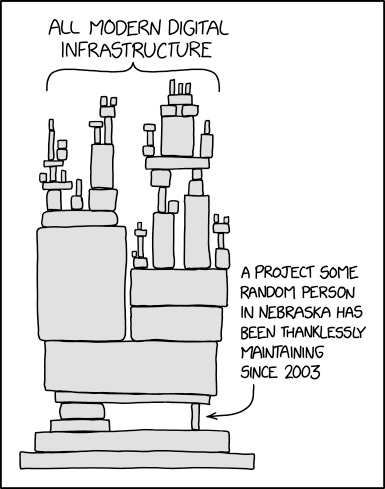
Won’t be the last story like this.
Send Me the Bill
NYT’s DealBook flagged “Big Law’s hunt to cash in on A.I”:
As A.I. threatens to upend the legal world’s business model of billable hours, firms have been racing to take advantage of new tools. Kirkland & Ellis, for instance, has committed to spending $500 million to build its own A.I. platform.
Others have partnered directly with frontier labs. (In April, Freshfields entered an agreement with Anthropic to build an in-house tool that could later be sold to other firms.)
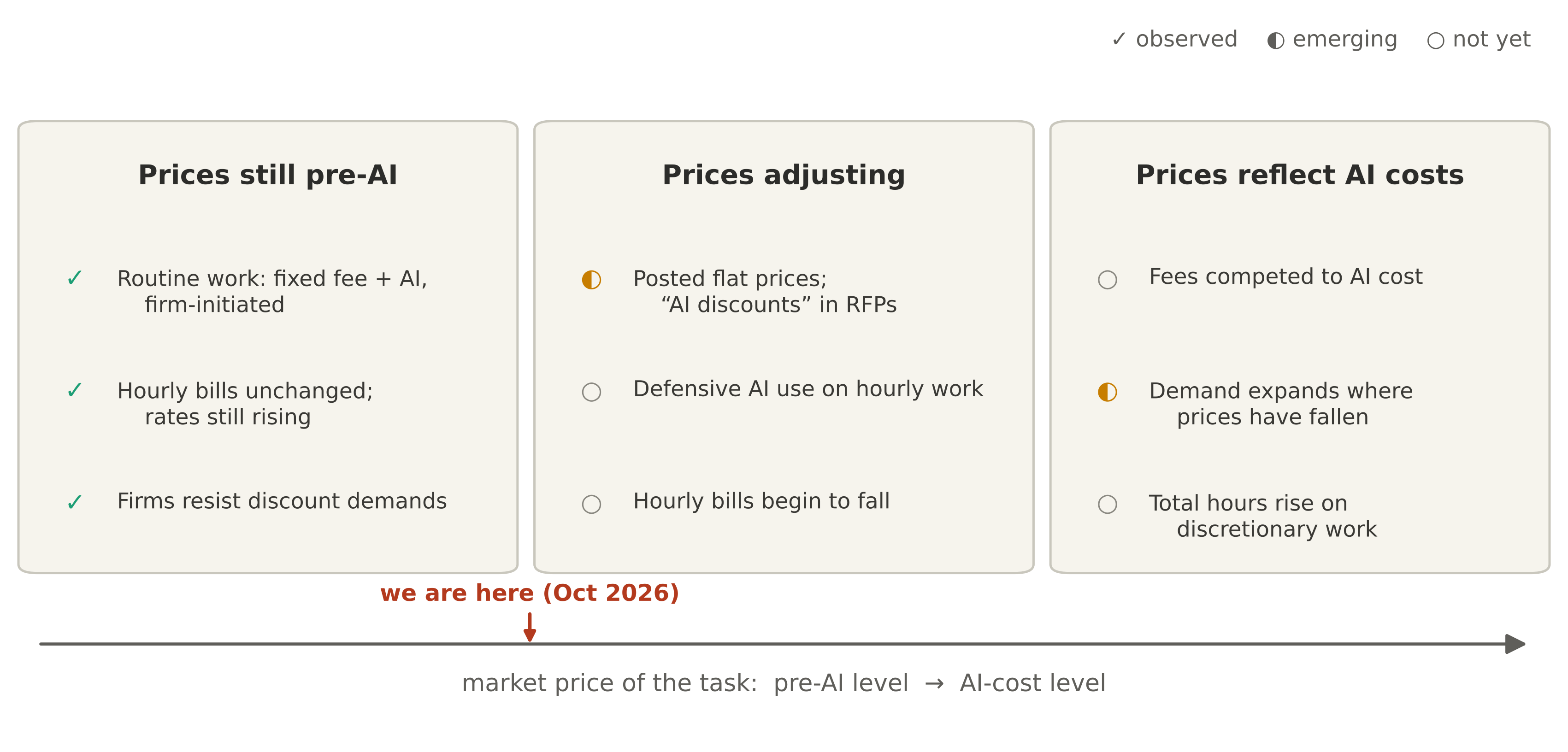
Elsewhere TGR explored what proliferating AI would do to law firm billing practices and incentive to adopt it (results below). But it hadn’t considered the above phenomenon where firms build, buy, sell, or spinoff standalone legal AI tools. Fortunately the model can predict where and how that happens and it’s consistent with what we’re seeing.
But as DealBook notes, law firm ownership rules don’t allow access to public equity, meaning corporate structure limits opportunity to exploit potential gains to legal tech. So workarounds emerge…
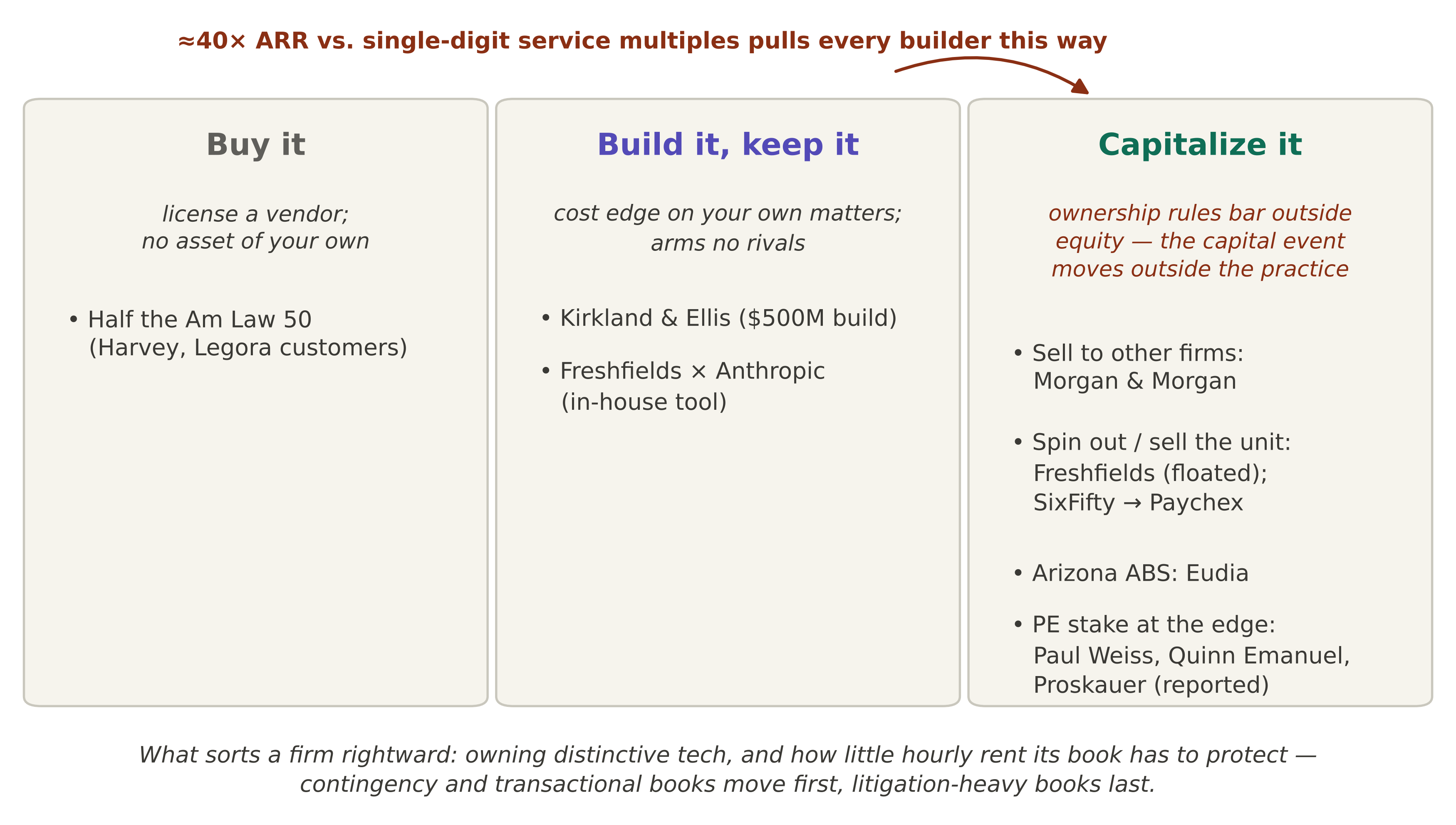
That is, law firms could be forgoing on the order of 40x returns on a hot legal tech market if they don’t figure out a way to effectively access public markets. If a particular spin out mechanism proves workable, expect Harvey/Legora’s impressive market share to flatline.
Independent Verification Organ(ization)
In another NYT piece, a relatively moving first-hand account of the structural failure of America’s organ transplant system. Not news to those who’ve worked on this issue before, but bears repeating as many times as possible.
Short version: organ donations are gathered, allocated, and delivered by a group of independent non-profit organizations (“organ procurement organizations” or “OPOs”), each of which is given a regional monopoly in which to operate. OPOs are subject to certification based on quality metrics meant to incentivize effectiveness.
Unfortunately prior to 2020 or so, OPOs lost certification basically never, in spite of well-known failures including falsified data and other deliberate behaviors which led to actual deaths. This was all well known to people who followed this stuff.
Why bring this up? Because advocates going all in on governing AI through so-called “Independent Verification Organizations (IVOs)” should slow their roll and reckon with the organ case study. Which they could, but I get the feeling they’re too far down the “We’ve solved it!” messaging to stress-test their handiwork.
OPOs were subject to a federal office with the authority (read: obligation) to review and decertify as needed, after the authority was previously delegated to a non-federal specialized authority. Both structures failed to model the unintended consequences over time. Both structures were so enamored with the cleverness of their policy design to conceive of failure modes.
Sounds familiar. IVOs are not a magical mechanism, and yet I’d concur they are likely one of the more promising avenues of AI governance that doesn’t suffocate the frontier. But the marketing reeks of [*sigh*] yet another group with little to no direct federal policy design, negotiation, or implementation experience.1
That Float Won’t Vote (or, a Share in Every Pot)
What would happen if every child in America got a SpaceX share? Ignore the thorny political economy questions to focus on corporate control.
Premise: Passive shareholders have the least propensity to vote.
Most common shareholder questions like director elections and executive comp.* are decided by share of actual votes cast → not much changes (institutional and primary controller (meaning Musk) still determine outcomes)
Changes to corporate charter and M&A decisions require a majority of all outstanding shares, so non-votes = nay votes
*as in the Tesla mega-payment vote, Musk was able to mobilize a population of otherwise passive superfan shareholders to adopt the proposal.
This all presumes voting shares are in play, but the net effect is this massive distribution scheme would marginally reduce power of institutional/13D accumulator activists, increasing Musk’s control in equal degree. But mostly not affect corporate governance of SpaceX.
Etc.
Ho hum. “Unvetted AI agents are accessing U.S. bank accounts.”
Appeared on NewsNation again in part to chat about this silly tweet. Silly not because of the actual content, but because of an adult human person describing as “buried” things that are (1) in the Executive Summary or (2) make up the 94 page risk factors section of Anthropic’s S-1 filing. Buried isn’t the word I’d use, and you just told on yourself.
“[T]he risks to U.S. national security of moving too slowly outweigh the impacts of imperfect alignment." Surprised it took this long.
The new hotness in data center design is idle GPUs. And also another reason data center moratoriums won’t have the effect you think they will.

The author is Nonresident Senior Fellow at FAI